
Colorado Real Estate in 2026: Top Trends & Market Movers Right Now
🏔️ Colorado Real Estate in 2026: Top Trends & Market Movers Right Now
As 2026 gains momentum, Colorado’s real estate market continues to evolve—showing a balanced, data-driven shift away from the extreme seller-favorable conditions of the pandemic years. Whether you’re considering buying, selling, or investing, here are the most important market themes shaping Colorado today.
📈 1. Market Stabilization: Slower Price Growth & More Balance
After years of rapid appreciation, Colorado’s statewide home prices have leveled off and even declined modestly year-over-year in some data sets, with average values around $529,000 — about a 2.4% decrease based on recent Zillow metrics.
-
The market is no longer universally red-hot; longer days on market and rising inventory give buyers more negotiation leverage.
-
Sale-to-list ratios dipping below 98% in several areas signal that sellers can no longer assume multiple offers at above list price.
What this means: The market is transitioning into moderate and healthy activity—good news for cautious buyers and strategic sellers who price accurately.
📦 2. Inventory Growth Is Real—and Regionally Uneven
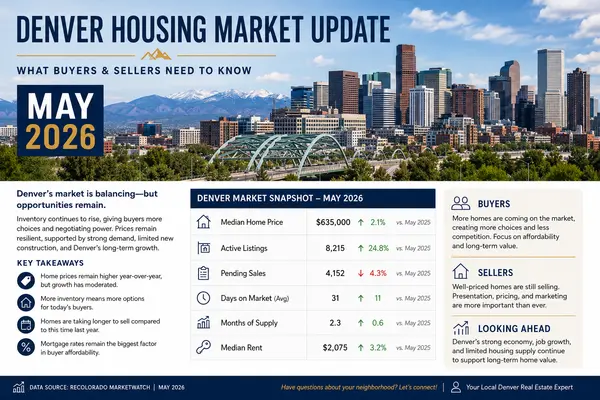
Across much of Colorado, housing supply is on the rise, giving buyers more selection and easing bidding-war pressure. Active listings have jumped meaningfully year-over-year in some markets—a dramatic change from the historically tight conditions.
However, this isn’t uniform:
-
Front Range metros such as Denver and parts of Northern Colorado are seeing larger quarterly increases in inventory.
-
Mountain and resort communities (where supply traditionally runs short) still grapple with very tight availability.
Takeaway: Buyers in Front Range and adjacent markets may find more opportunities today than in years past—but premium resort areas remain competitive.
🏦 3. Mortgage Rates, Affordability & Buyer Behavior
Mortgage rates remain a central driver of buyer decisions. While still above historic lows, many forecasts expect them to trend into the low–mid 6% range in 2026—supporting increased movement by buyers who were previously sidelined.
Key patterns emerging:
-
Buyers are acting more deliberately—taking time with decisions and negotiations due to higher borrowing costs.
-
Rental market shifts and a slight decline in rents in some areas are also influencing household decisions on buying vs. renting.
Bottom line: Affordability pressures persist, but improving mortgage dynamics and growing inventory are opening windows for qualified buyers.
🏙️ 4. Regional Market Divergence: Not All Colorado Is the Same
One of the year’s defining trends is market bifurcation—different regions performing in unique ways:
-
Denver Metro & Colorado Springs: Facing longer days on market and flat or softer pricing compared with prior years.
-
Northern Colorado (Fort Collins & Boulder Corridor): Buyer demand remains solid despite slower statewide momentum.
-
Mountain and resort towns: Still strong in high-end segments, though inventory shifts impact dynamics differently than the Front Range.
This reinforces a core principle: Colorado’s housing market is not a monolith—local data matters.
🧠 5. Investor Activity & Strategic Opportunities
Investors continue to monitor Colorado for value-add opportunities, especially in transitioning neighborhoods and areas with strong fundamentals like job growth and infrastructure development.
-
Balancing rental yields with changing rent trends is a current focus.
-
Rising inventory and market normalization may create openings for disciplined investors.
Investor tip: Thorough due diligence and understanding of neighborhood trajectory are more critical than ever in 2026.
🔎 Final Thoughts: What This Means for You
For Buyers:
This year offers more choice and negotiating power than recent seller-dominant cycles. Patience and strategic planning are your strongest assets.
For Sellers:
Pricing with precision, preparing homes professionally, and adjusting expectations to current market signals remain key to successful listings.
For Investors:
Inventory shifts and long-term demand vectors highlight specific niche opportunities—but local detail and timing are vital.
Categories
Recent Posts









"My job is to find and attract mastery-based agents to the office, protect the culture, and make sure everyone is happy! "