
Denver Housing Market Forecast 2026: Prices, Rates & Trends
Denver Real Estate Market Outlook 2026: What to Expect This Year (Plus the National Picture)
The quick read: 2026 market takeaways
-
Mortgage rates are lower than last year’s highs, but still “elevated.” Freddie Mac’s 30-year fixed rate ended 2025 around 6.15%, and many forecasters expect rates to hover in the low-6% range rather than plunge.
-
Nationally, sales are expected to rebound more than prices. NAR forecasts existing-home sales up ~14% with prices up ~4% in 2026.
-
Zillow expects modest home value growth overall. Zillow’s economists forecast roughly +1.2% home value growth in 2026 (nationally).
-
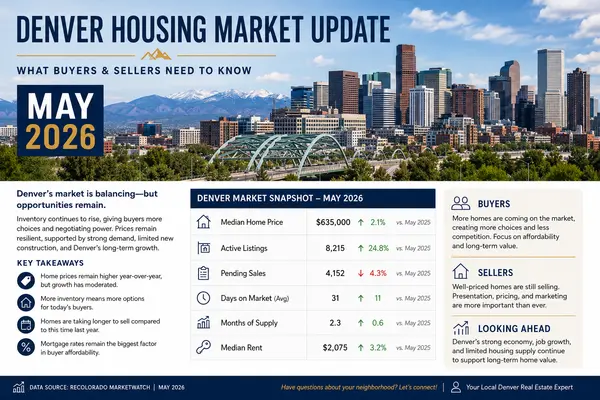
Denver enters 2026 more balanced than the last few years. Local indicators show more inventory and longer market times than the ultra-tight peak, giving buyers more negotiating room than they’ve had.
Where Denver starts the year: a snapshot of recent local data
The latest publicly shareable Denver Metro Association of Realtors (DMAR) infographic (Nov. 2025) shows a market that’s functioning more “normally” than the frenzy years:
-
Median close price: $585,000
-
Active listings: 10,506
-
Months of inventory: 3.84 months
-
Median days in MLS: 36 days
On the portal side (helpful for trend direction, not a perfect substitute for MLS-only reporting):
-
Zillow: Average Denver home value around $525,742, down ~4.2% year over year (as of its latest update).
-
Redfin (City of Denver): November 2025 median sale price around $575K, down ~2.0% year over year, with homes averaging ~43 days to sell.
What that means: Denver isn’t “crashing”—it’s rebalancing. Prices can soften in some segments while the overall market stays active, especially when inventory rises from unusually low levels.
The national housing market in 2026: steadier, not sudden
1) Mortgage rates: likely “sticky” around the low-to-mid 6% range
Rates matter because they change monthly payments more than small price moves do. Freddie Mac’s survey put the average 30-year fixed mortgage at 6.15% at the end of 2025, and many outlooks describe 2026 as a year of gradual improvement, not dramatic drops.
2) Home sales: expected to improve as affordability inches forward
-
NAR: projects existing-home sales up ~14% in 2026, with prices up ~4%.
-
Redfin: frames 2026 as a “reset,” expecting affordability to improve as income growth outpaces home price growth, helping demand come back gradually.
3) Prices: most forecasts point to modest growth—varies by metro
-
Zillow: forecasts ~+1.2% national home value growth in 2026 (modest).
-
NAR: expects a somewhat higher ~4% gain nationally.
How to reconcile the difference: forecasters use different methods (and sometimes different “price” measures). The common ground is more important: most major outlooks expect modest appreciation, not a boom.
Denver in 2026: what to watch (and what it means for you)
Inventory and days on market will keep driving negotiation
With DMAR showing 3.84 months of inventory and 36 median days in MLS (Nov. 2025), buyers have more time to compare homes than they did during the peak frenzy.
Expect:
-
More price reductions on listings that start too high
-
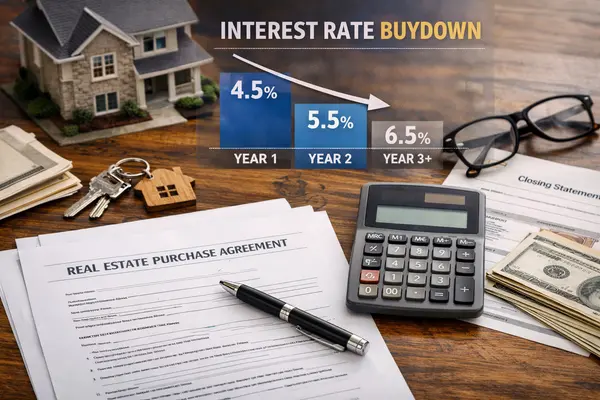
More concessions (rate buydowns, repairs, credits) in competitive price bands
-
A sharper divide between “move-in ready” homes and homes needing work
Pricing will be neighborhood- and condition-dependent
Denver is rarely one market. Even when citywide numbers look flat, specific micro-markets can outperform (or underperform) based on:
-
School zones and commute patterns
-
New construction supply nearby
-
Insurance/HOA costs (especially condos/townhomes)
-
Property condition and layout (functional floor plans sell faster)
Buyers: 2026 looks like a “prepared buyer” year
If rates hold around the low 6s and inventory stays healthier than recent years, the advantage goes to buyers who:
-
Get fully underwritten early (or at least strong pre-approval)
-
Shop by monthly payment, not just price
-
Request inspections and negotiate strategically (concessions can matter more than headline price)
Sellers: win on strategy, not just timing
If you’re selling this year, the playbook is simpler—but stricter:
-
Price to today’s comps, not last year’s peak
-
Make the home “show-ready” (paint, lighting, curb appeal)
-
Be prepared to offer reasonable concessions if similar homes nearby are doing it
The 3 indicators I’m watching most in 2026
-
Mortgage rate trend (weekly + seasonal spring movement)
-
Active listings + months of inventory (Denver’s negotiating leverage meter)
-
Pending sales (the clearest early signal of demand shifting)
Bottom line: Denver in 2026 is about balance and precision
This year looks less like a headline-driven boom/bust story and more like a skill-based market—where pricing, presentation, and financing strategy determine outcomes.
If you want, tell me whether your audience is buyers, sellers, or investors (or all three), and I’ll tailor this into a tighter version for your website—complete with a Denver-focused FAQ section and keyword map.
Categories
Recent Posts







"My job is to find and attract mastery-based agents to the office, protect the culture, and make sure everyone is happy! "