
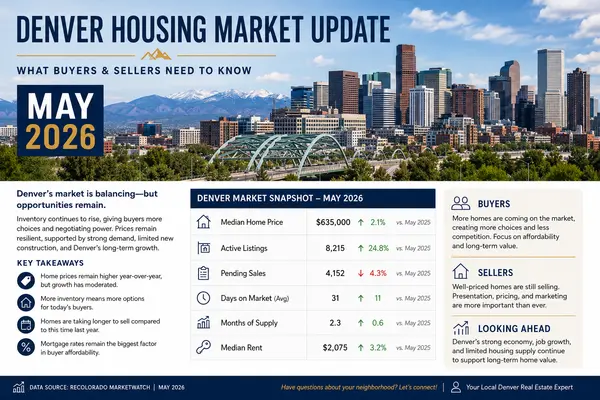
Denver Housing Market Update: What Buyers & Sellers Should Know Right Now
Denver Housing Market Update: What Buyers & Sellers Should Know Right Now
The Denver metro housing market continues to evolve in 2025, shaped by shifting mortgage rates, persistent inventory challenges, and steady demand driven by both local job strength and ongoing in-migration. Below is a clear, data-driven snapshot of current trends to help homeowners, buyers, and investors make informed decisions.
1. Inventory Is Climbing—But Still Below Historical Norms
After several years of exceptionally tight supply, Denver has seen a gradual rise in active listings. According to recent updates from REcolorado and market trackers like Redfin, inventory has grown year-over-year, giving buyers more options than they had during the 2020–2023 ultra-competitive period.
Even with this increase, total available homes remain below the long-term Denver average, keeping the market tilted toward sellers in many neighborhoods.
Why it matters:
-
Buyers are gaining negotiation leverage.
-
Sellers must price accurately—overpricing is leading to longer days on market.
2. Home Prices Remain Stable with Mild Upward Pressure
Denver’s median sale price has shown modest year-over-year growth, supported by household formation, strong wages, and limited new construction. National data from NAR and Zillow also places Denver among markets that tend to retain price resilience due to consistent demand.
What we’re seeing:
-
Price growth varies significantly by neighborhood (e.g., Central Denver slower; SE suburbs more competitive).
-
Well-maintained, move-in-ready homes continue to attract multiple offers.
3. Mortgage Rates Are Shaping Buyer Behavior
Mortgage rates have fluctuated, but many forecasters—including Freddie Mac and Mortgage Bankers Association—expect gradual easing over 2025, which may unlock pent-up demand.
Impact on Denver:
-
Buyers who paused in 2024 are re-entering the market.
-
Sellers may see increased activity as affordability improves.
4. Days on Market Are Normalizing
Homes are taking slightly longer to sell compared to the frenzy of previous years. This is a sign of returning market balance, not a downturn.
Typical patterns today:
-
Entry-level homes still move quickly—sometimes within a week.
-
Luxury homes often require more marketing time.
5. What This Means for You
For Buyers:
-
Expect more choice and less intense bidding pressure.
-
Locking in a rate early can protect you from short-term market swings.
-
Focus on neighborhood-level data—trends vary widely.
For Sellers:
-
Pricing strategically remains critical.
-
Pre-market preparation (repairs, staging, photography) has a measurable impact on final sale price.
-
Proper timing and market positioning can maximize exposure.
Final Thoughts
Denver remains one of the strongest housing markets in the Rocky Mountain region—supported by economic diversity, population growth, and enduring lifestyle appeal. While the market is more normalized than in recent years, it stays competitive and resilient.
If you’re considering buying or selling, a neighborhood-specific analysis is essential. Feel free to reach out if you’d like a personalized breakdown tailored to your home or target area.
Categories
Recent Posts










"My job is to find and attract mastery-based agents to the office, protect the culture, and make sure everyone is happy! "